ServicesFilter replacement
Filter Replacement and Maintenance in Hurst
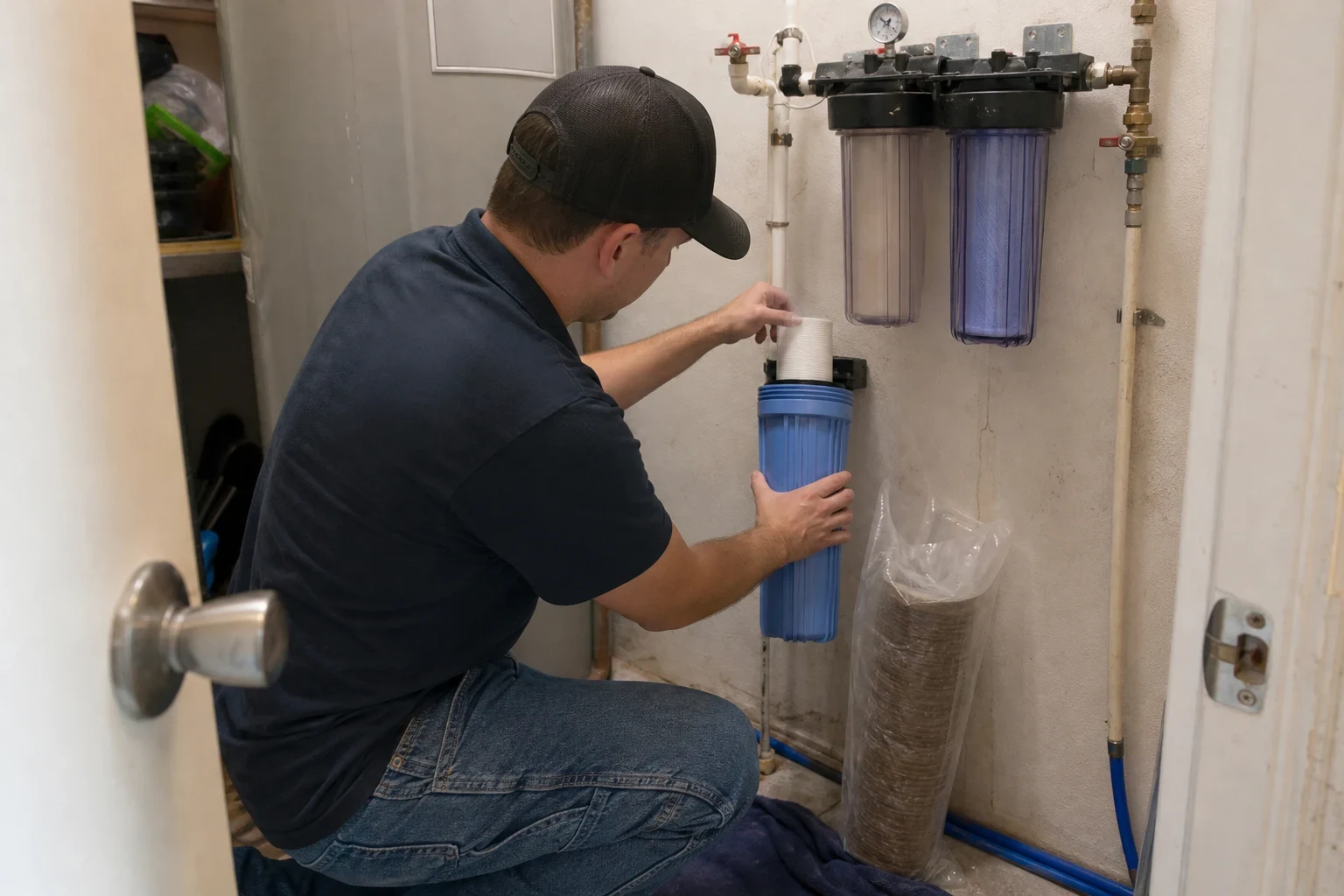
Filters only work while they have room left to catch things. We change cartridges, RO membranes and filter media on schedule, check your system for leaks and lost pressure, and leave the floor under your sink or by your water heater as clean as we found it.
Keeping the System You Already Paid For Working
No filter lasts forever. Sediment cartridges clog with grit, carbon uses up the surface that traps chlorine, and RO membranes foul bit by bit. Once that happens, your water tastes the way it did before the system was installed, and pressure may drop as well.
We service whole-house carbon systems, iron and sediment filters, under-sink reverse osmosis units and water softeners. If we put it in, we already know which parts it takes. If another company did, we inspect it first and explain what's involved before any work begins.
We tell you plainly what we replaced, what we noticed and when to schedule the next visit. You won't get a list of add-ons.
What a Maintenance Visit Covers
Cartridge and membrane swaps
We replace sediment, carbon and RO cartridges with parts that fit your housing. Old cartridges go in a bag and leave with us.
Housing and O-ring check
We clean the housings, inspect the O-rings for flat spots or cracks and lube them with food-grade silicone. A dry or pinched O-ring is the most common cause of a slow drip after a filter change.
Pressure and flow test
We read the water pressure on the way into the filters and again on the way out. When the gap between those two numbers is wide, a cartridge is plugged or the housing is too small for the flow your home needs.
RO tank and faucet check
On under-sink units we check the storage tank's air charge and make sure the faucet and drain line are sealed and flowing right.
Softener and media look-over
For softeners and backwashing filters we check the salt level, the settings and the control valve, and note when the media itself is wearing out.
A written note for your records
We leave a short note with the date, the parts used and the next due date, so you are not guessing six months from now.
Signs Your Filters Are Overdue
Chlorine taste has returned
When your tap water smells like a swimming pool again, the carbon is probably used up. It quits catching chlorine long before it looks dirty.
Weak flow at faucets
A plugged sediment filter restricts water to the entire house. Showers lose force and the washing machine fills slowly.
Slow drinking water faucet
A thin stream from the RO faucet typically points to a fouled membrane or a tank that's lost its air charge.
A rust-colored cartridge
Dark orange or brown on a sediment or iron filter means it's full. Beyond that, staining can begin to get through.
No idea when it was last changed
That's reason enough to call. Most cartridges run on a schedule counted in months, not years.
How the Visit Goes
- 1
We set a time by phone
On the call, give us the brand of your system if you know it and your best guess at the last service date. That way we load the right cartridges on the truck and finish in one trip.
- 2
Floors covered first
Before we open a housing, we put down a drop cloth and a tray. Filter housings hold water, and some of it always comes out. If your system is outside or in the garage, we keep hoses and drain water off your beds and lawn.
- 3
Shut off, swap, flush
We close the valves, change the filters, check the seals and flush the new cartridges so the first glass you pour does not taste of carbon dust.
- 4
Walk-through and next date
We show you what came out, test for leaks with the water back on and tell you what we noticed. Then we write down when the next change is due.
What Changes the Cost
The price of a maintenance visit depends mostly on the parts your system takes and how many there are. We tell you the cost by phone or on arrival before any work starts, so there are no surprises on the bill.
- Type and number of filters
- A single under-sink cartridge costs less than a multi-stage RO setup or a large whole-house tank. Membranes cost more than sediment cartridges.
- Brand and part availability
- Some systems take standard sizes. Others use brand-specific cartridges that cost more.
- How long it has gone
- A filter that is badly overdue can leave buildup in the housing or lines, which takes extra cleaning time.
- Worn parts found on the visit
- Cracked housings, failed O-rings or a dead RO tank add to the cost. We show you the problem and ask before replacing anything extra.
Filter Maintenance Questions
Something not covered here? (817) 383-8177
How often should my filters be changed?
That varies with the type of filter and with how many people are drawing water in your home. Sediment and carbon prefilters commonly need a swap somewhere between six months and a year. RO membranes last longer than that. We look at your setup and give you a schedule that matches it.
Do you service systems you didn't install?
Yes, in most cases. We check the brand and housing size first. If parts are hard to get, we tell you that up front instead of forcing something that does not fit.
Will my water be shut off for long?
Usually just for the time it takes to swap and flush the filters. We let you know before we close the valve so no one is mid-shower.
Is this something I can do on my own?
Often, yes. Most housings open with the wrench that came with the system, and we are glad to walk you through it while we are there. Where home swaps go wrong is a dry O-ring, a housing threaded on crooked or skipping the flush on new carbon. Having us look the system over once a year catches those small problems, even if you handle the routine changes yourself.
Do you work outside Hurst?
Yes. We also service systems in nearby towns like Bedford, Euless and North Richland Hills. The Service Areas page lists more.
Let's Catch Up on Your Filter Changes
Call with the brand of your system and a rough idea of when the filters were last swapped. We will show up with the right cartridges, keep your floors dry and leave you a note with the next due date.