ServicesWater softeners
Hurst Water Softeners, Only After a Hardness Test
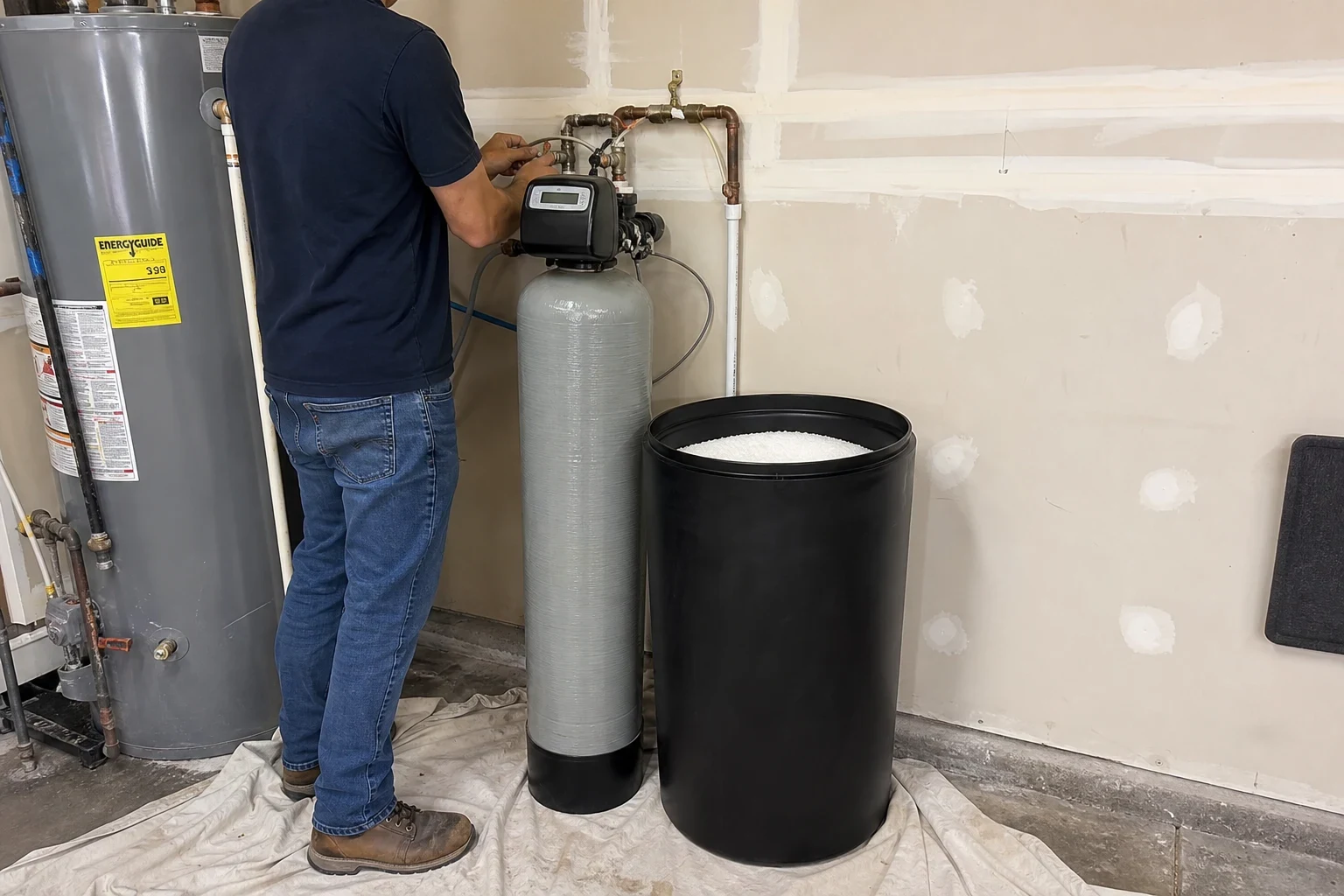
No softener goes into your house because of a hunch. We measure hardness right at your faucet, share the result with you and give you an honest yes or no on whether one will help. When the answer is yes, we match the size to how your household uses water and put it in with drop cloths on your floors.
A Softener Only When Your Water Calls for One
Hard water carries dissolved calcium and magnesium. Heat pulls those minerals out as scale. You see it as white crust on faucets and spots on glasses. You don't see it building up inside the water heater and the dishwasher, but it does.
A softener swaps those minerals out using resin beads and a salt brine. It works well, but it adds salt use, a drain line and some upkeep. That's a fair trade when hardness is high. When it isn't, it's money spent on a problem you don't have.
So we test first. If your number is low, we'll say so and point you to something that fits better, like whole-house carbon filtration for taste and smell.
What a Softener Job Includes
A hardness reading at your faucet
We read hardness in grains per gallon and look for iron too, since iron affects which softener setup fits. The result is written down for you to keep.
A unit matched to your home
Size comes from your hardness reading and your household's water use. An undersized unit regenerates over and over. An oversized one lets the resin sit idle and channel.
Bypass valve at the unit
A bypass valve goes in beside the softener. A single turn sends water around it, so your taps keep working while it is out of service. Where possible, we leave an outdoor hose bib on unsoftened water so your yard and plants get the untreated supply.
Drain and brine tank set up
Rinse water needs a correct drain with an air gap, and we run one. We level the brine tank, add the first bags of salt and program when the unit regenerates.
Care for floors and yard
We cover the floor from your entry to where we work. When the job takes us near an outdoor spigot or the main shutoff, we stay out of your beds and collect every scrap of cut pipe.
Hands-on walkthrough
Whoever will tend the softener learns how to add salt, switch the bypass and read the control head before we go, so nothing is a mystery later.
Signs Hard Water May Be the Problem
Chalky buildup on faucets
A white, crusty layer forms on faucets, showerheads and drains and returns shortly after you scrub it away.
Cloudy glassware
Dishes and glasses leave the dishwasher spotted or hazy, even when you use rinse aid.
Soap that barely suds
You need extra shampoo or dish soap to get a lather, and a film lingers on your skin and shower walls.
Rumbling from the water heater
Popping sounds in the tank usually mean scale has collected at the bottom. North Texas heat isn't the cause, but a heater that runs hard all year makes it show up sooner.
Appliances wearing out early
Clogged or failing ice makers, coffee makers and dishwashers may come from mineral buildup. A test shows whether that's it or something else.
How the Work Goes
- 1
Test and talk
We run the hardness test and go over the result with you at the kitchen table or in the garage. If a softener isn't worth it, that's the end of the pitch.
- 2
Written estimate
If it is, you get a line-item estimate: the unit, the parts, the labor and any plumbing changes. We tell you where the unit will go and how long we'll need the water off.
- 3
Install day
We cover the floors, shut off the water, cut in the bypass and run the drain. Most homes are without water for a short stretch while we tie in, and we tell you before we close the valve.
- 4
Start-up and cleanup
We flush the system, start the first regeneration and check for leaks at every joint. Then we haul out the packaging and old fittings and sweep up.
What Moves the Price
Every softener job is priced after the test, because the test sets the size. The rest comes down to where the unit goes and what plumbing is already there. You'll see each piece on the estimate before you agree to anything.
- Your hardness number
- Higher hardness needs more resin capacity, which means a larger unit.
- Household water use
- More people and more bathrooms mean more gallons between regenerations, which affects the size you need.
- Where the main line is
- An easy-to-reach line near a drain keeps labor down. A long run to a drain or a tight closet takes more time and parts.
- Iron in the water
- If the test shows iron, a softener may need help. Sometimes iron and sediment filtration ahead of it is the better setup.
- Existing plumbing condition
- Old or corroded fittings near the tie-in sometimes need replacing so the new connections hold.
Softener Questions We Hear
Something not covered here? (817) 383-8177
Is the hardness test really necessary?
It is. Hardness differs from home to home, and we don't want to sell a softener your water doesn't need. The test is quick and gives us the number we size by. If you already have a water report, have it handy and we'll go through it together.
Does softened water taste salty?
At typical hardness, most people don't notice it. A softener exchanges minerals for sodium, so harder starting water means more sodium afterward. If you want drinking water without it, under-sink reverse osmosis at the kitchen takes care of that.
Can the softener run on potassium?
Most units can use potassium chloride. A bag costs more and you may go through a bit more of it. We set the softener up for whichever one you pick.
Will a softener fix chlorine taste?
No. It deals with hardness minerals only. Whole-house carbon filtration is what handles taste and smell, and both can sit on the same line.
How much looking after does a softener need?
Mainly topping up salt when it runs low, typically every month or two. Now and then the brine tank needs a cleaning and the settings a check. If you'd rather hand that off, our filter replacement and maintenance visits include it.
Find Out What's in Your Water
We'll test your hardness, give you a straight answer and treat your home with care if we do the work. We serve Hurst and nearby towns like Bedford, Euless and North Richland Hills.