ServicesWater testing
Water Testing in Hurst
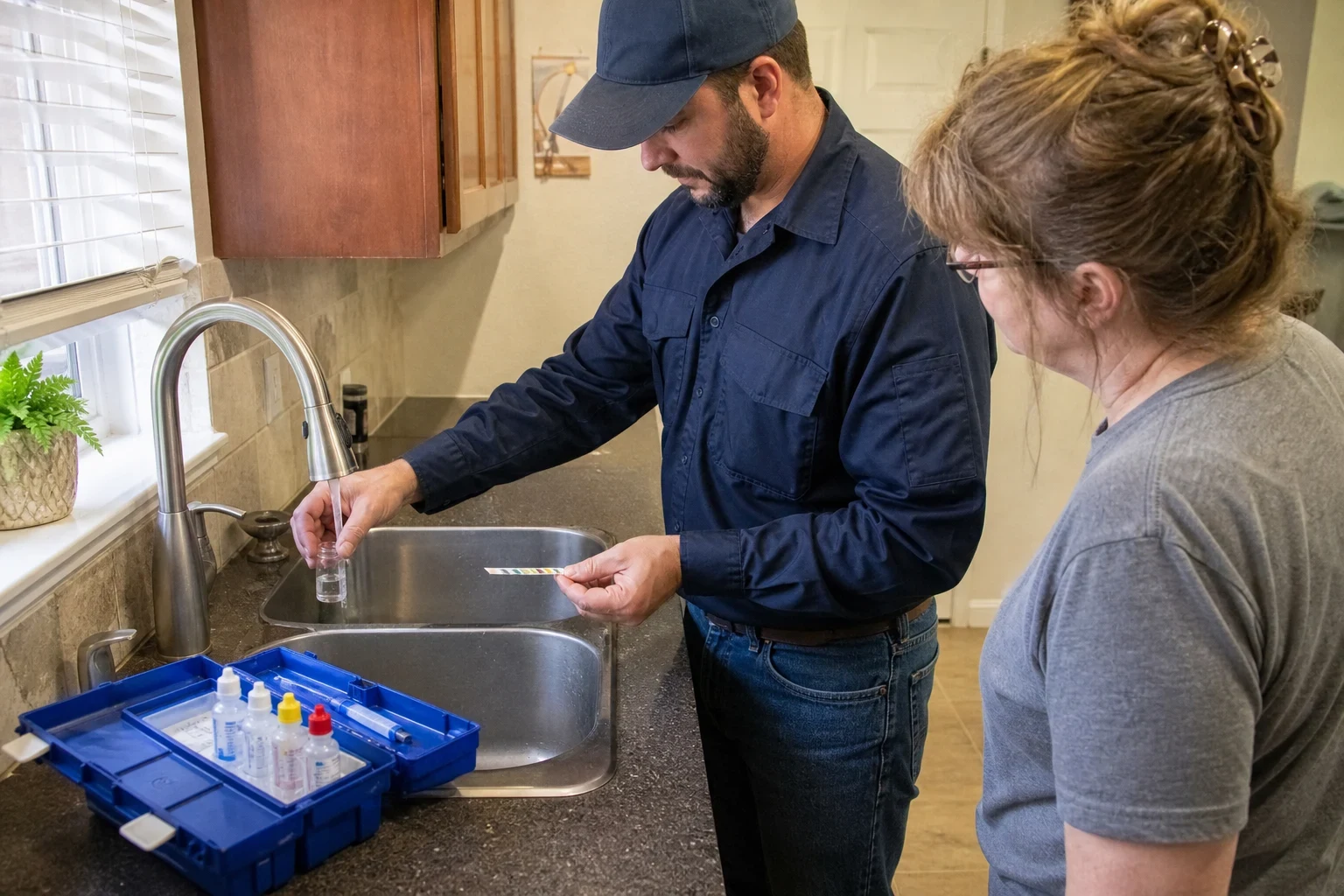
Before you spend money on a filter or softener, find out what is actually in your water. We sample at your taps, protect the floor under every sink we open, and walk you through the numbers in plain words. Sometimes the right answer is no equipment at all.
Know what is in your water before you buy anything
City water in the Hurst area is treated and tested by the utility. That report covers the water leaving the plant. It does not cover what happens in the pipes between the street and your kitchen faucet, or what your family notices in the glass.
Water testing answers the questions the city report cannot. Is the chlorine taste strong at your tap? Is the water hard enough to justify a softener? Is there lead coming from old solder or brass fittings? Is that orange ring in the tub iron, or something else?
We test first because it keeps you from being oversold. If the results say your water is fine, we tell you that and leave.
What we check during a visit
- Hardness
- This reading shows how much calcium and magnesium your water carries, in grains per gallon. It tells us whether a softener is worth it in your home or would just sit there costing you salt.
- Chlorine or chloramine
- We check the disinfectant level at your tap. It is usually the reason water tastes or smells like a pool, and it tells us whether carbon filtration would help.
- Iron and sediment
- Staining, cloudy water and gritty aerators point to iron or particles in the line. We test for both so the fix matches the problem.
- Lead and copper
- Homes built before 1986 can have lead solder on copper pipe. For those, we take a first-draw sample and send it to a lab for an accurate reading.
- pH and dissolved solids
- These two readings round out the picture. They help explain scale, odd taste and how hard your fixtures are working.
- A written summary
- You get every result on paper with a short note beside each one. No jargon, and no recommendation without a number behind it.
Signs it is time to test your water
Pool smell or taste
If you find yourself buying bottled water because tap water tastes off, a test shows how strong the disinfectant is at your faucet.
White crust on fixtures
Scale on shower heads, glass doors and the kettle can mean hard water. It can also be minor. A hardness test settles it.
Orange or brown stains
Rust-colored rings in toilets, tubs or laundry usually point to iron, either in the supply or from aging pipes in the house.
An older home
If your plumbing dates from before the mid-1980s, a lead test is a smart, simple check, especially with kids in the house.
Someone is selling you a system
If a salesperson has already pitched a softener or filter, get independent numbers before you sign anything.
What moves the price of a water test
Testing costs depend on what you need to know. A basic in-home check costs less than a full lab panel. We quote the exact tests by phone before the visit, so there is no surprise on the day.
Which tests you need
Hardness, chlorine and iron can be read on site. Lead and some other checks go to an outside lab, which adds to the cost.
Number of sample points
Testing one kitchen tap is simpler than comparing the main line, a bathroom and an outdoor spigot.
Lab turnaround
Standard lab timing is the usual choice. Faster processing is available from some labs at a higher fee.
Follow-up testing
If you install a filter later, a second test confirms it is working. That is a separate, smaller visit.
How the visit goes
- 1
A short phone call
You tell us what you are noticing and how old the house is. We tell you which tests fit and what they cost before we schedule anything.
- 2
We arrive and set up
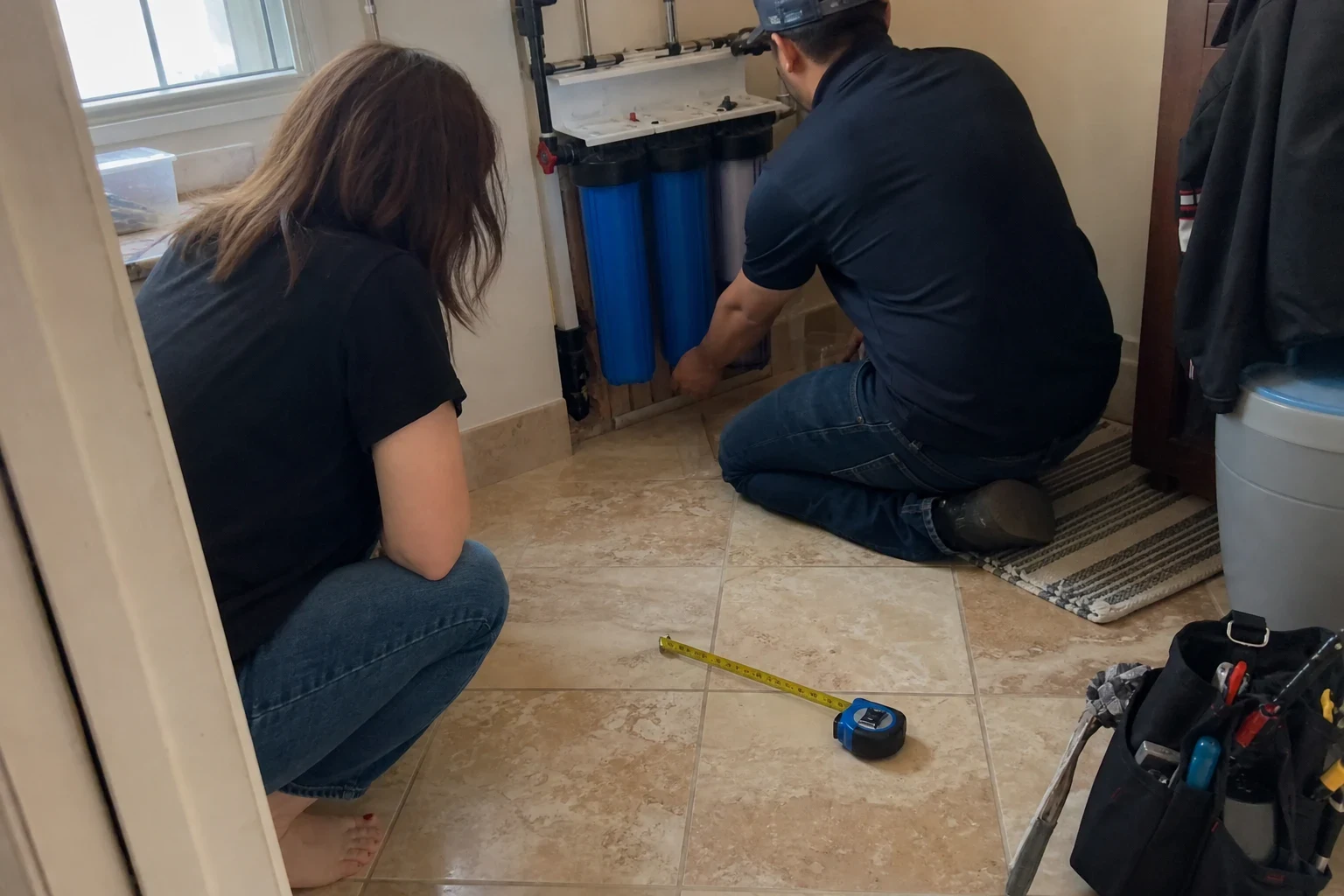
We wear shoe covers inside and lay a drop cloth under any sink cabinet we open. We tell you which taps we need and roughly how long it will take.
- 3
Sampling at your taps
We usually draw from the kitchen faucet and the point where water enters the house, so we can see if anything changes inside your pipes. Most readings happen right there in front of you. Lead samples go to a lab.
- 4
Cleanup
Cabinets go back the way we found them, the cloth comes up, and nothing is left on your counters.
- 5
Results, explained
We go over each number with you, in person or by phone once lab results come back. If a fix makes sense, we say which one and why. If not, we say so.
Water testing questions
Isn't city water already tested?
Yes, and the utility does that work well. Their testing covers water as it leaves treatment and moves through the system. It cannot tell you about your own pipes, your fixtures or what you taste at your sink.
Are you just testing so you can sell me a filter?
No. We would rather lose a sale than install something you do not need. Plenty of tests end with us telling a homeowner their water is fine. When we do recommend something, the number that justifies it is on your written results.
How long until I get results?
We read most of the numbers right at your sink and talk through them with you on the spot. Lab tests such as lead take longer. When those results arrive, we call you and explain what they mean.
Do I need to be home?
Yes, since we work inside at your sinks. For a lead test, it helps if no one runs the water for several hours beforehand. We will explain exactly how when we schedule.
Should I test before getting a softener?
Always. Water hardness varies, and a softener only earns its keep when the numbers call for one. That is why our water softeners page starts with a hardness test.
What happens if you find a problem?
We explain what it means and the options. That could be whole-house carbon filtration for chlorine taste, under-sink reverse osmosis for drinking water, or iron and sediment filtration for stains. You decide, with no pressure.
Get real numbers on your water
One visit, clean floors when we leave, and plain answers about what your water needs. We serve Hurst and nearby towns like Bedford, Euless and North Richland Hills.