ServicesWhole-house carbon filtration
Whole-House Carbon Filtration in Hurst, TX
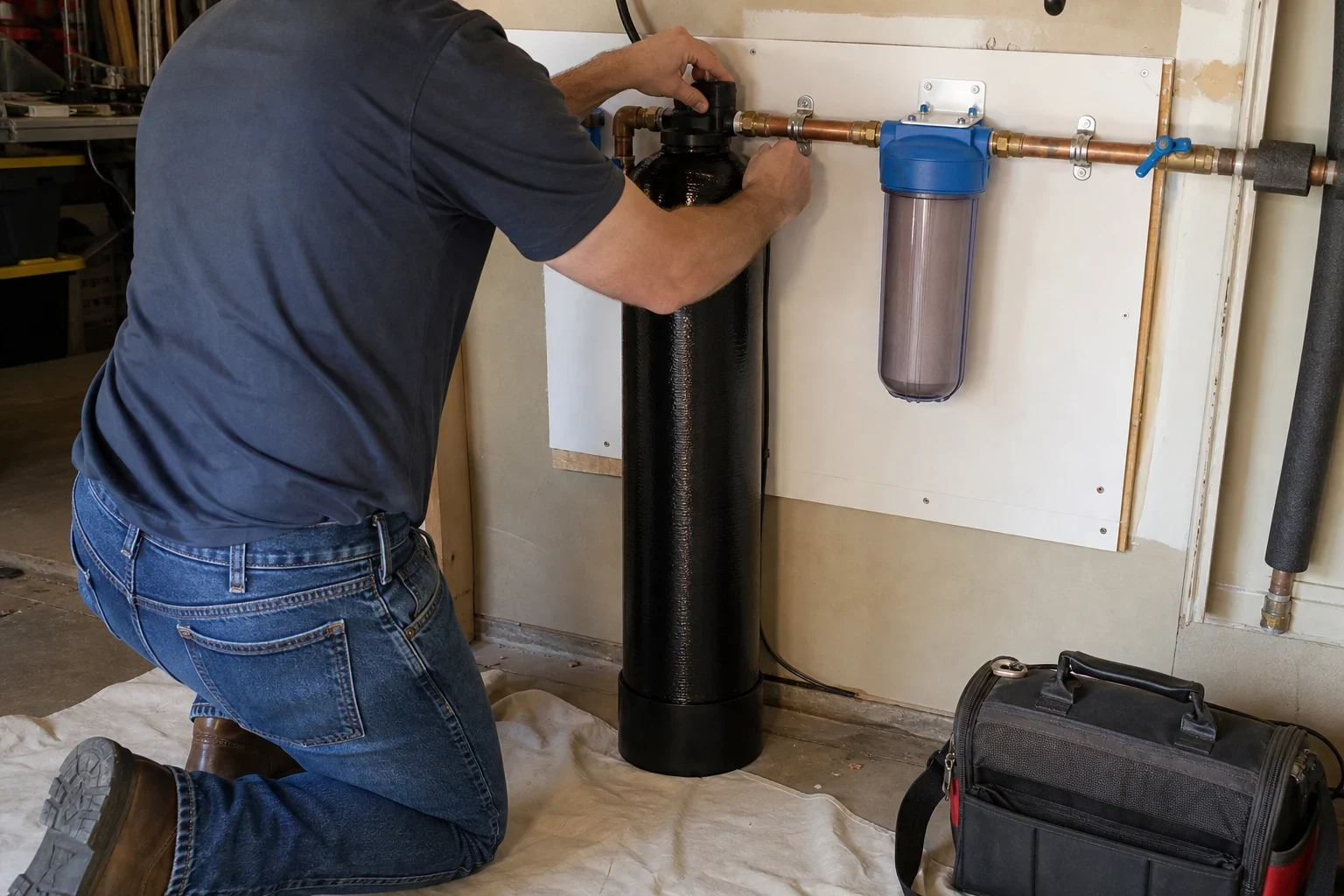
We put a carbon filter on your main line so every tap, shower and appliance gets water with less chlorine taste and smell. We test first, size the tank to your home, protect your floors and beds, and tell you exactly when the water will be off.
What a whole-house carbon filter does
Cities disinfect water so it stays safe while it travels to your house, and that matters. Still, the chlorine or chloramine they use can make showers smell like a pool and give tap water a flat taste. A whole-house carbon filter goes where the main line comes into the house and removes most of it before any faucet sees it.
It fits best when taste, odor or dry skin after showers is a problem throughout the house. If drinking water is your only concern, under-sink reverse osmosis may suit you better. If you're dealing with orange stains or grit, iron and sediment filtration should come first. We'll point you to the one that matches your problem.
Carbon isn't a softener. It does nothing for hardness scale, and we won't claim otherwise.
What the job includes
A water test before we quote
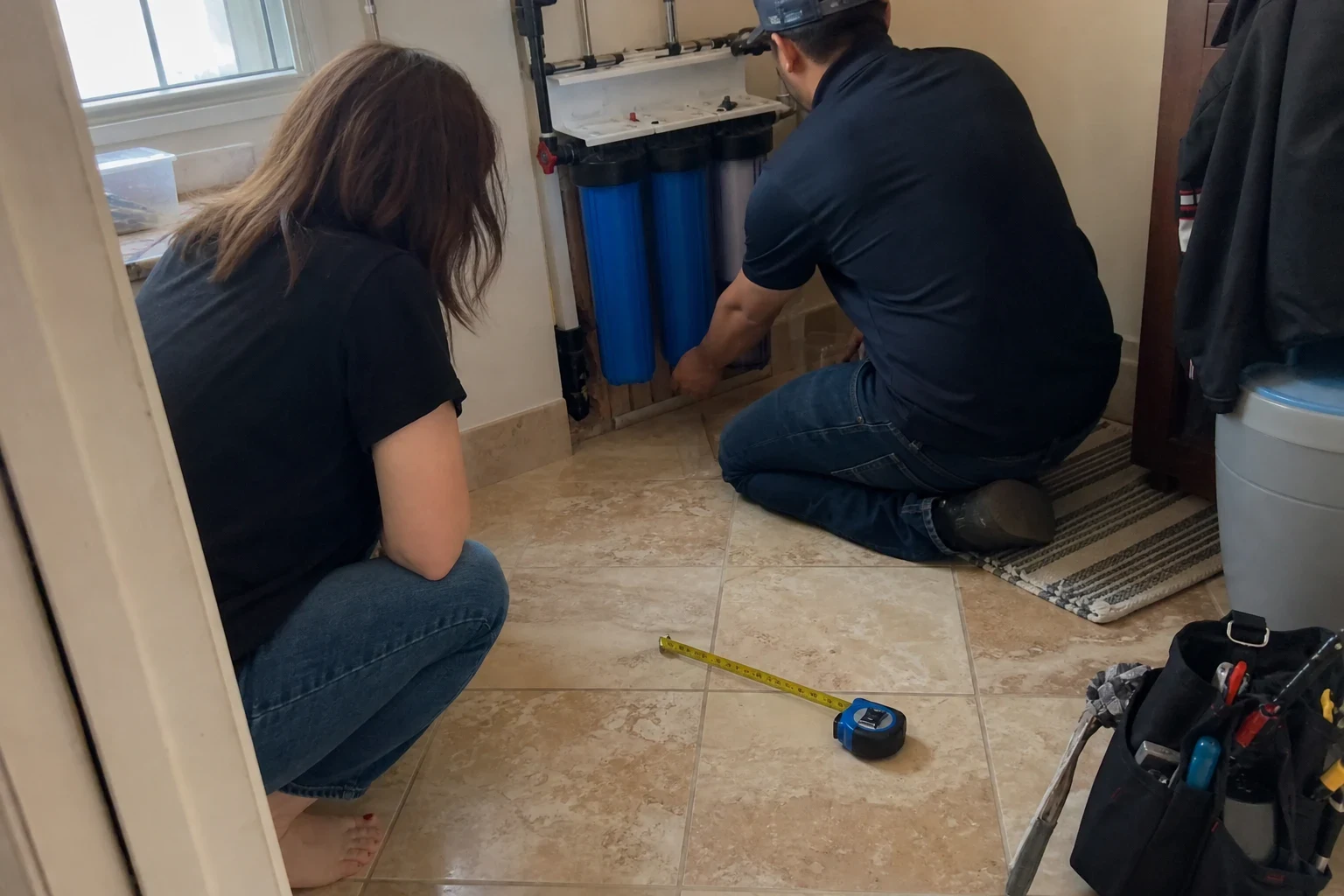
We check chlorine level and hardness at your kitchen tap. That tells us whether standard carbon is enough or whether you need catalytic carbon, which handles chloramine better.
A system sized to your flow
We count bathrooms and look at how much water your home uses at its busiest. Too small a tank, and your shower pressure drops. Going much bigger than you need just adds cost with no real benefit.
A prefilter ahead of the carbon
We add a cartridge in front of the carbon tank to trap sand and bits of pipe scale. That keeps grit out of the carbon bed so it lasts longer.
Bypass valve and shutoffs
You can route water around the system for service or when you need full, unfiltered flow. We show you how before we leave.
Protection for floors and plants
Drop cloths go down along the path from the door to the install spot. If the main line is outside, we tarp the beds and put back any mulch or pavers we move.
Cleanup and a walkthrough
We flush the new carbon until it runs clear, wipe down the area and haul away the packaging. Then we walk you through the system and the filter schedule.
Signs carbon filtration makes sense for your home
- Pool smell in the shower
- If the bathroom smells like chlorine when the hot water runs, carbon is the most direct fix.
- Tap water tastes off
- If your family buys bottled water because the tap tastes like chemicals, most people notice the difference the first day.
- Dry skin or itchy scalp
- Some people react to chlorine in shower water. Carbon won't cure a skin condition, but many families say showers feel better.
- Coffee and ice taste wrong
- Chlorine carries into coffee, tea and the ice maker. Filtering at the main covers the fridge line too.
- Filters all over the house
- If you're changing pitcher filters and shower-head filters in every room, one system at the main can replace them.
How install day goes
- 1
Call and test
We talk through what you're noticing, then test your water at the house. You get a written estimate with each part listed.
- 2
Pick the spot together
Most systems go in the garage near the water heater or outside where the main enters. We agree on the location with you before we cut any pipe. Outdoor units get a cover to keep the North Texas summer sun off the tank.
- 3
Water off, briefly
We tell everyone at home when the water goes off and about how long. Most installs take a few hours, and the water is off for only part of that.
- 4
Flush and check
We flush the carbon, check every joint for leaks and test chlorine again at a tap so you can see the change yourself.
- 5
Clean up and explain
We pick up the drop cloths, clear the work area and leave you the filter schedule in writing.
What moves the price
Pricing comes after we test your water and see the route of your main line. The estimate breaks out parts and labor. If something on install day would change the number, we discuss it with you before going ahead.
- How big the tank is
- Homes with more bathrooms and higher flow call for a larger tank holding more carbon.
- Which carbon is used
- Catalytic carbon, used for chloramine, is pricier than standard carbon. We suggest it only when your test calls for it.
- Location of the main line
- An open spot in the garage is faster than a line behind finished walls or close to a slab. Outdoor setups may need a pad and a cover.
- What your pipes are made of
- Tying into old galvanized pipe safely can take more work. Copper and PEX are usually easier.
- Added equipment
- Putting a softener or iron filter on the same line raises the cost. We include them only when a test backs it up.
Questions about whole-house carbon filters
- When does the carbon need to be changed?
- That comes down to tank size, your water use and the chlorine level. The carbon outlasts the sediment prefilter by a wide margin, and the prefilter usually needs a swap every few months. We build a schedule around your use, and our filter replacement and maintenance service can handle it.
- Will my water pressure go down?
- Not in a way you'd notice with a correctly sized system. Lost pressure usually traces to an undersized tank or a clogged prefilter, which is why we size by your fixtures and flow instead of using one standard model.
- Will it take out lead?
- You can't count on it. A typical whole-house carbon tank isn't designed for lead. If older pipes or fixtures have you worried about lead, start with water testing. Based on what it shows, we may recommend under-sink reverse osmosis for drinking and cooking water.
- Is the water still safe once the chlorine is removed?
- Yes. City water arrives already treated, and carbon is mostly about taste and smell. Keep in mind that filtered water left standing in the pipes a long time has no disinfectant in it. After a week or more away, let the taps run for a minute when you return.
- Will the garage or yard be left messy?
- We aim to leave it just as we found it. Floors along our route get covered, nearby beds get a tarp for outdoor work and we check with you before moving anything. Once we're done, the system should be the only change.
Find out if carbon is the right fix
Tell us what you're tasting and smelling. We'll test, explain what we find in plain words and only recommend a system if it fits your home.